

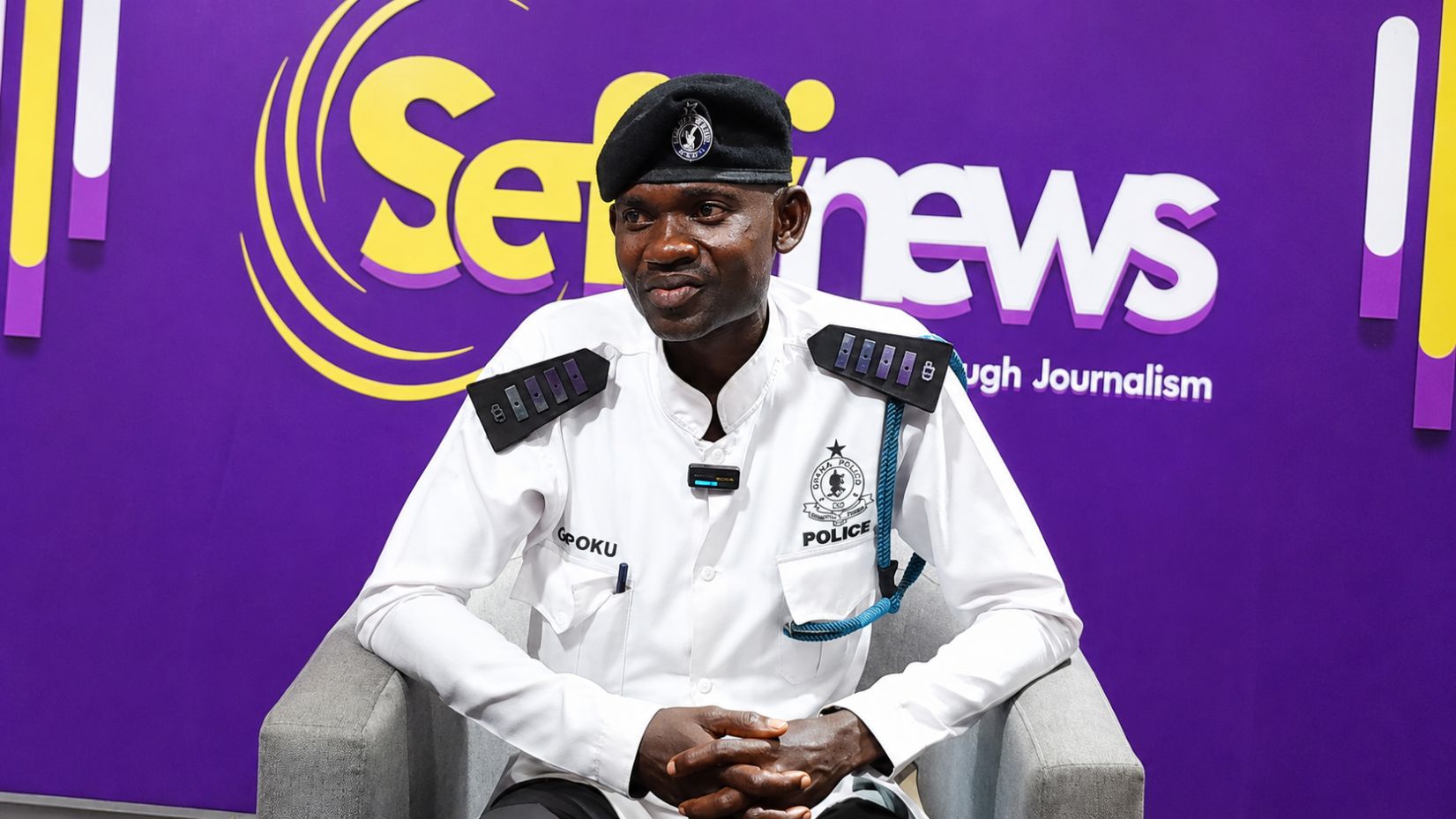
Chief Inspector Emmanuel Opoku, the Traffic Management Supervisor in charge of education at the Motor Traffic and Transport Department (MTTD) under the Ghana Police Service in Sefwi Wiawso, has raised concern over increasing road accidents in the Western North Region, attributing the trend largely to persistent violations of road traffic regulations.
He noted that disregard for basic road safety rules continues to endanger lives, stressing that strict enforcement and public cooperation are urgently needed to reverse the situation.
He made the remarks while speaking on the “Kro Yi Mu Nsem” programme on Sefwinews, hosted by Nana Asare Kesse, where he engaged the public on road safety education, enforcement challenges, and ongoing interventions to improve discipline on the roads.
Unsafe Driving Behaviour Driving Accidents
Chief Inspector Opoku explained that over-speeding, overloading, distracted driving, and non-compliance with licensing requirements remain major causes of road crashes in the region.
He warned that continued disregard for regulations is directly contributing to the rising number of accidents recorded in parts of Western North, particularly within busy commercial corridors.
Road Conditions and Safety Challenges in Sefwi Wiawso
He expressed concern about the road infrastructure within the Sefwi Wiawso Municipality, describing several routes as single-lane with no designated parking bays, which creates congestion and increases the risk of collisions.
According to him, drivers are expected to exercise extreme caution and, where necessary, park at safe distances from main roads to avoid obstruction and accidents.
He further identified Sefwi Boako and Asawinso as accident-prone communities, stressing that these areas require continuous enforcement, public education, and driver discipline due to frequent violations and heavy traffic movement.
Collaborative Efforts to Improve Road Safety
Chief Inspector Opoku commended joint efforts between security agencies and local authorities in improving road safety education across the region.
He highlighted the role of the Western North Regional Police Commander, DCOP Dr. Francis Kwame Tsidi, and the MCE for Sefwi Wiawso, Hon. Dominic Gyasi, who have supported outreach programmes aimed at sensitising drivers, traders, and students.
He noted that these awareness campaigns have reached several communities, including Sefwi Bekwai, Juaboso, Akontombra, and Asawinso, as well as educational institutions such as SEWASS, where students are being trained on basic road safety practices.
He added that involving young people is critical, as they represent future road users and can help spread safety consciousness within their communities.
Strict Enforcement of Road Regulations
Chief Inspector Opoku outlined several key provisions of Ghana’s road traffic regulations, emphasizing that enforcement will be intensified to ensure compliance:
He explained that under Regulation 33, all drivers are required to renew their licences every two years to ensure continuous validation of driving competence.
Under Regulation 63, all drivers must carry a first aid kit in their vehicles, as emergency preparedness is essential in accident situations.
He further highlighted Regulation 107, which prohibits the use of mobile phones while driving, warning that distracted driving remains a major cause of crashes, especially among commercial vehicles.
On commercial transport, he explained that Regulation 13 requires taxis to adhere to approved colour standards, stressing that vehicles with more than three colours may be deemed illegal for commercial use.
He also referenced Regulation 163, which imposes a 50 km/h speed limit in sensitive areas such as schools, mosques, churches, and recreational grounds, urging drivers to always prioritise human life over speed.
Regulations on Commercial Cars and Motorcycles (Pragya)
A major focus of his address was the regulation of commercial tricycles, commonly known as “pragya”.
He stated that under Regulation 156, riders must be at least 21 years old, possess valid documentation, and must not carry more than three passengers, including the rider.
He further emphasized that operating without a number plate is illegal under Regulation 11, and such violations attract arrest and prosecution.
According to him, Regulation 43 requires all commercial riders to register with approved associations and comply with DVLA requirements, while Regulations 7 and 8 outline proper licensing procedures.
He also warned that licences must be original and not photocopied or displayed as screenshots, in line with Regulation 47, stressing that enforcement officers will reject non-original documents during checks.
He added that commercial tricycles must display yellow number plates clearly visible at all times, as failure to do so indicates private or illegal commercial use.
Crackdown on Non-Compliant Operators
Chief Inspector Opoku announced that MTTD has issued a directive for all pragya riders to register with recognised associations before the end of the month, warning that failure to comply will result in arrests and sanctions.
He explained that the initiative is aimed at improving accountability, reducing lawlessness, and ensuring that all commercial riders operate within legal frameworks.
Alcohol, Drug Use, and Road Safety Enforcement
He further disclosed that the Regional Police Command has provided officers with equipment to detect alcohol and drug influence among drivers.
He stressed that substance abuse while driving significantly increases the likelihood of accidents and endangers innocent road users.
He urged drivers to avoid alcohol consumption before operating vehicles, especially commercial drivers who carry passengers daily.
Emergency Response and Public Awareness
To improve emergency response coordination, he shared key contact numbers for the public:
- 155 – Emergency response
- 1855 – Road Safety Authority
- 191 – Ghana Police Service
- 192 – Ghana National Fire Service
He encouraged the public to report reckless driving, accidents, and violations promptly to enable quick response and enforcement action.
Call for Public Cooperation
Chief Inspector Opoku concluded by urging drivers, riders, and pedestrians to cooperate with MTTD officers, emphasizing that enforcement is not meant to punish but to protect lives.
He cautioned that officers who enforce the law are often misunderstood or labelled as enemies, but stressed that their mandate is to ensure safety for all road users.
He called for a collective responsibility among stakeholders, noting that reducing road accidents in the Sefwi Wiawso Municipality requires discipline, education, and consistent enforcement.
Watch our interview with Chief Inspector Emmanuel Opoku