
The Minority in Parliament has criticised the government’s decision to increase the fuel oil levy from GH¢0.24 per litre to GH¢1.93 per litre, arguing that the measure will impose additional costs on businesses and consumers without effectively addressing smuggling.
The increase, introduced through amendments to the Energy Sector Levies framework, is intended to tackle revenue losses associated with fuel smuggling and subsidy abuse.
However, the Minority insists that the government should instead focus on strengthening enforcement mechanisms and improving compliance among operators.
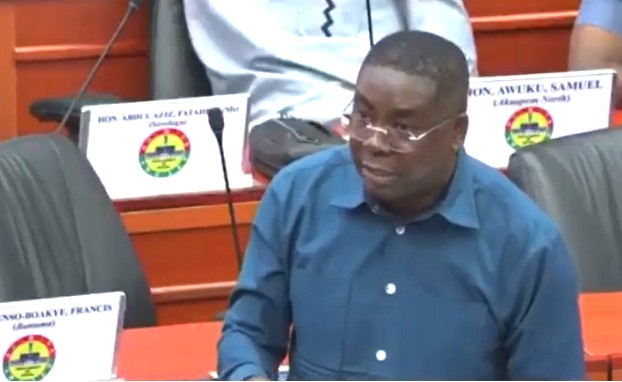
Contributing to the debate on the Energy Committee’s report on the levy, Tano North MP, Dr Gideon Boako argued that imposing higher taxes would punish compliant businesses while failing to address the activities of smugglers.
“Once the hunter has learnt to shoot without missing, the bird also goes flying without perching. So there is no justification or indication that if we introduce additional tax, the smuggling will stop,” he said.
Dr Boako questioned why the government had not prioritised stronger tracking systems and electronic monitoring to deal with smuggling.
He further argued that although companies would bear the legal responsibility of paying the levy, the economic burden would eventually be transferred to consumers through higher prices.
“If a company or a manufacturing company relies on fuel oil for boilers, generators or industrial heat, any additional cost by way of this tax will be passed on to the consumer,” he said.
The MP warned that the policy could undermine efforts to reduce inflation by increasing production costs and reducing household purchasing power.
“At a time that Ghana is talking about lower inflation, we should not, by the introduction of a new bill, do anything that has a cascading effect on inflation,” Dr Boako added.
The Minority maintained that improving enforcement and preventing leakages would provide a more sustainable solution than increasing the tax burden on businesses and consumers.
Send your news stories via WhatsApp on 0550759727