

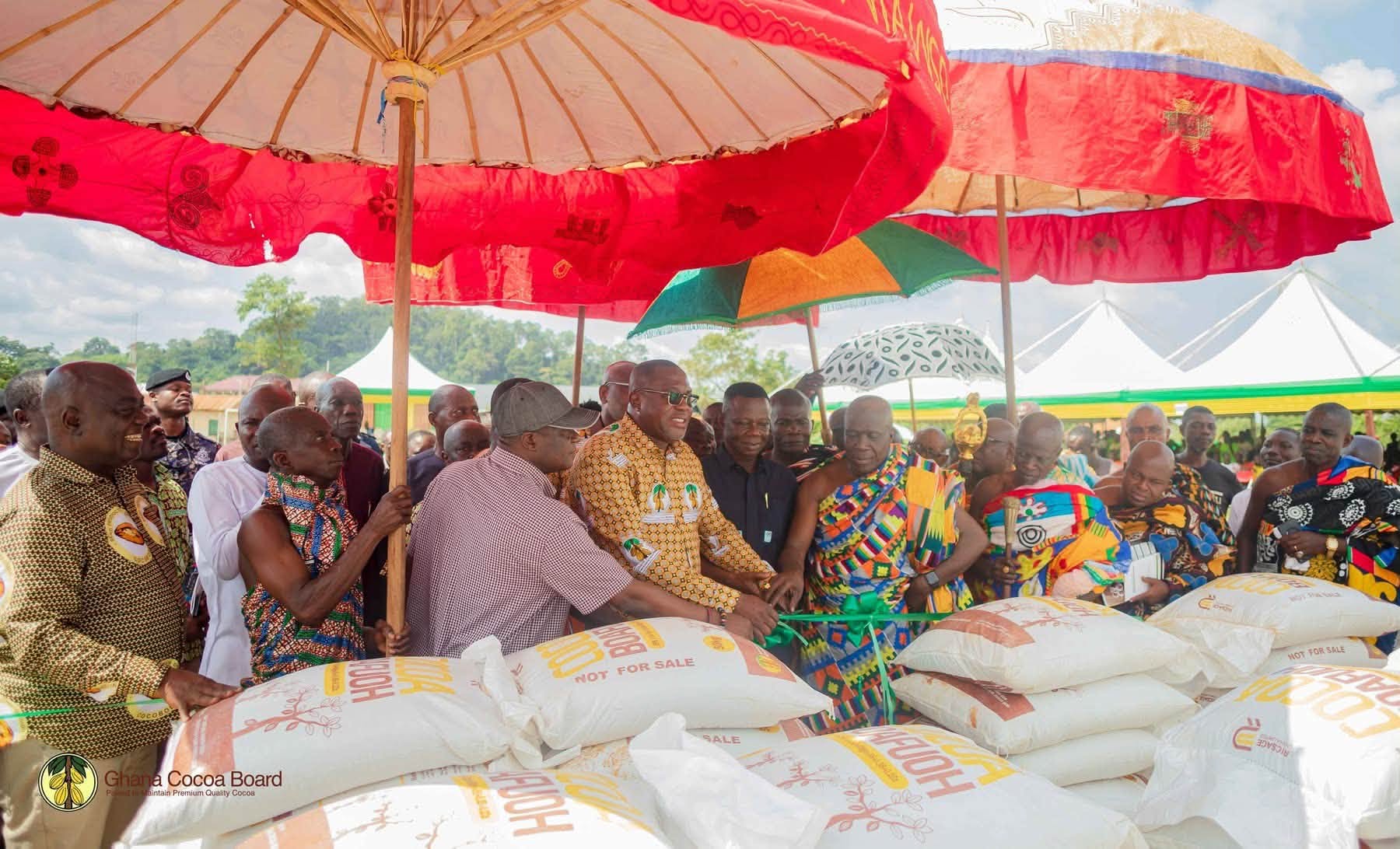
The Ghana Cocoa Board (COCOBOD) has reintroduced the free distribution of fertiliser and other agro-inputs to cocoa farmers as part of efforts to increase productivity, reduce production costs and revive Ghana’s cocoa sector.
The programme, officially relaunched in Sefwi Wiawso in the Western North Region, replaces the previous 50 per cent fertiliser subsidy arrangement with a fully funded distribution system aimed at improving farmers’ access to essential agricultural inputs.
The free fertiliser and agro-input distribution programme forms part of broader efforts to address production challenges, improve farmers’ incomes, rehabilitate affected cocoa farms and restore the country’s position as a leading cocoa producer.
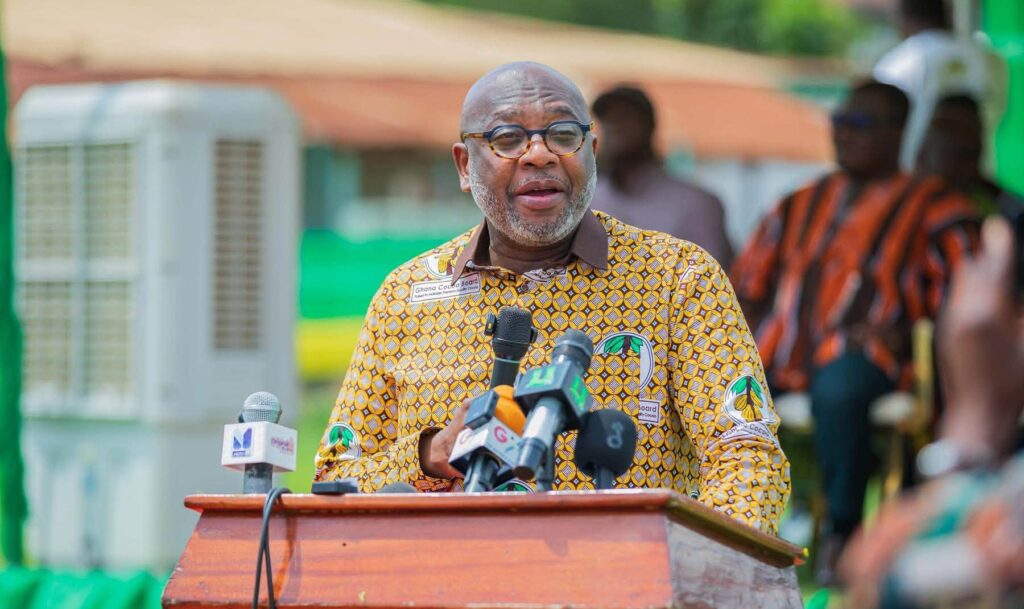
Speaking at the launch, Chief Executive Officer of COCOBOD, Dr Randy Abbey, said the intervention would significantly reduce farmers’ production costs while supporting efforts to increase cocoa output across the country.
He explained that eligible cocoa farmers would receive granular and liquid fertilisers, insecticides, fungicides, as well as pneumatic and motorised sprayers at no cost.
According to him, a farmer cultivating five acres of cocoa could save approximately GH¢3,500 on granular fertiliser alone during the current season.
Dr Abbey said the previous subsidy arrangement had failed to achieve its intended objectives, with only 13 per cent of the subsidy cost recovered between 2017 and 2025.
He said the new distribution system would rely on COCOBOD’s digital Cocoa Management System (CMS) to ensure that the inputs reach registered farmers whose farms have been mapped and verified.
Farmers’ identities would be confirmed using their farmer identification cards, Ghana Cards or biometric systems, while the quantity of inputs allocated would depend on the size and condition of their farms.
He cautioned that individuals found diverting, hoarding, reselling or smuggling the inputs would face legal action.
Addressing the decline in cocoa production in the Western North Region, Dr Abbey disclosed that output had fallen from an annual peak of 340,000 metric tonnes to approximately 140,000 metric tonnes, largely due to the spread of the Cocoa Swollen Shoot Virus Disease (CSSVD).
He said COCOBOD was mobilising funds from development banks and private sector partners to rehabilitate diseased farms and restore the livelihoods of affected farmers.
The COCOBOD Chief Executive also highlighted other government interventions, including the adjustment of the cocoa producer price to GH¢42,400 per metric tonne, equivalent to GH¢2,650 per 64-kilogramme bag.
He further announced plans to introduce tertiary education scholarships for children of cocoa farmers from the 2027/2028 academic year.
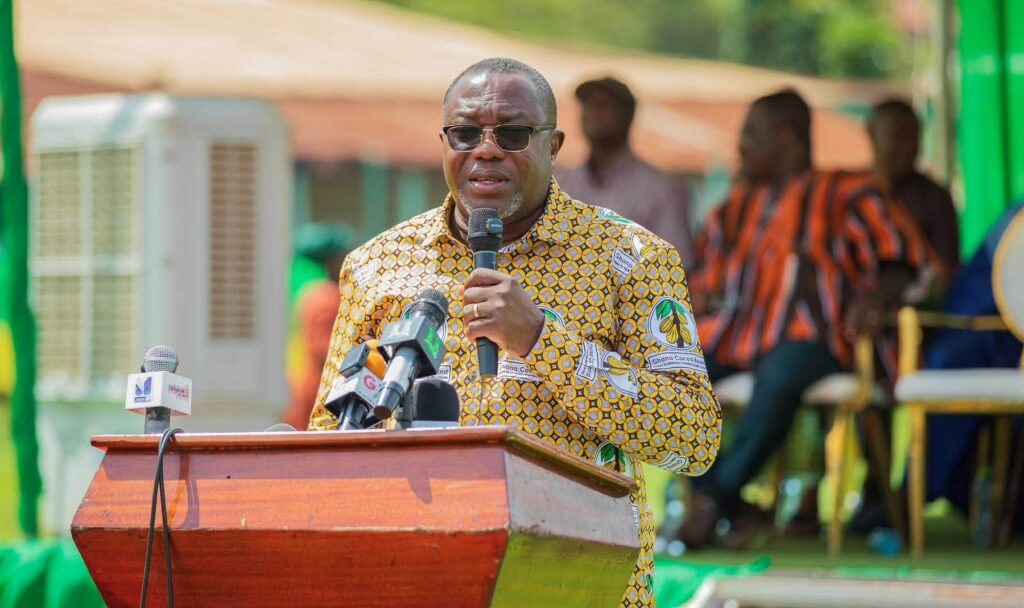
On his part, Board Chairman of COCOBOD, Dr Samuel Ofosu-Ampofo, disclosed that the government had procured more than 2.5 million bags of granular fertiliser for distribution to cocoa farmers nationwide, with approximately 1.2 million bags already delivered.
He said the government had also strengthened the mass spraying programme through the provision of 37,000 spraying machines and the repair of more than 40,000 previously broken-down machines, bringing the total number of operational machines to approximately 67,000 across the country.
According to him, the intervention had created employment opportunities for about 27,000 spraying operators.
Dr. Ofosu-Ampofo added that 5.7 million litres of pre-mixed fuel had been supplied to support spraying operations, while monthly allowances for mass spraying operators, mechanics and security personnel had been increased from GH¢500 to GH¢700.
He further disclosed that loading and unloading fees for agrochemicals had been doubled from 50 pesewas to GH¢1 in recognition of the contribution of workers involved in the programme.
On the safety of workers, the Board Chairman said 89,000 sets of personal protective equipment (PPE) had been procured for spraying operators, mechanics, task force members and society chief farmers.
The protective equipment includes Wellington boots, overalls, respirators, overcoats, hats and goggles.
He described the provision of protective equipment to chief farmers nationwide as a significant development, noting that it was the first time such support had been extended to all chief farmers across the country.

Meanwhile, Acting President of the Sefwi Wiawso Traditional Area, Nana Ofori Ahenkan II, described the relaunch of the free fertiliser distribution programme as an important intervention to revitalise the cocoa sector and improve the livelihoods of farmers.
He said the presence of government and COCOBOD officials in the Western North Region demonstrated the importance attached to the initiative and reaffirmed a collective commitment to the growth and sustainability of Ghana’s cocoa industry.
Nana Ofori Ahenkan II recalled that the Western North Region had long been recognised as one of Ghana’s leading cocoa-producing areas before the outbreak of the Cocoa Swollen Shoot Virus Disease, which destroyed thousands of hectares of cocoa farms and significantly affected production.
He commended cocoa farmers for their dedication and sacrifices over the years, saying their efforts had helped sustain the industry and preserve Ghana’s reputation as a producer of premium-quality cocoa on the international market.
He expressed confidence that the free fertiliser distribution programme would help secure the future of the cocoa sector while improving the incomes and livelihoods of cocoa-farming households.
Under the theme, “Cocoa Sector Reset: Free Fertilizer for Increased Productivity and Improved Farmer Income,“ Nana Ofori Ahenkan II urged farmers to take full advantage of the programme and ensure that the inputs were used for their intended purpose.
He also encouraged farmers to follow the recommended application procedures to achieve maximum results and improve productivity on their farms.
“Let us all see this as an investment in our farms, our future and the future of our nation,” he said.
On behalf of the chiefs and cocoa farmers, he expressed gratitude to the Government of Ghana and COCOBOD for recognising the contribution of farmers and introducing the initiative to address challenges facing the sector.