
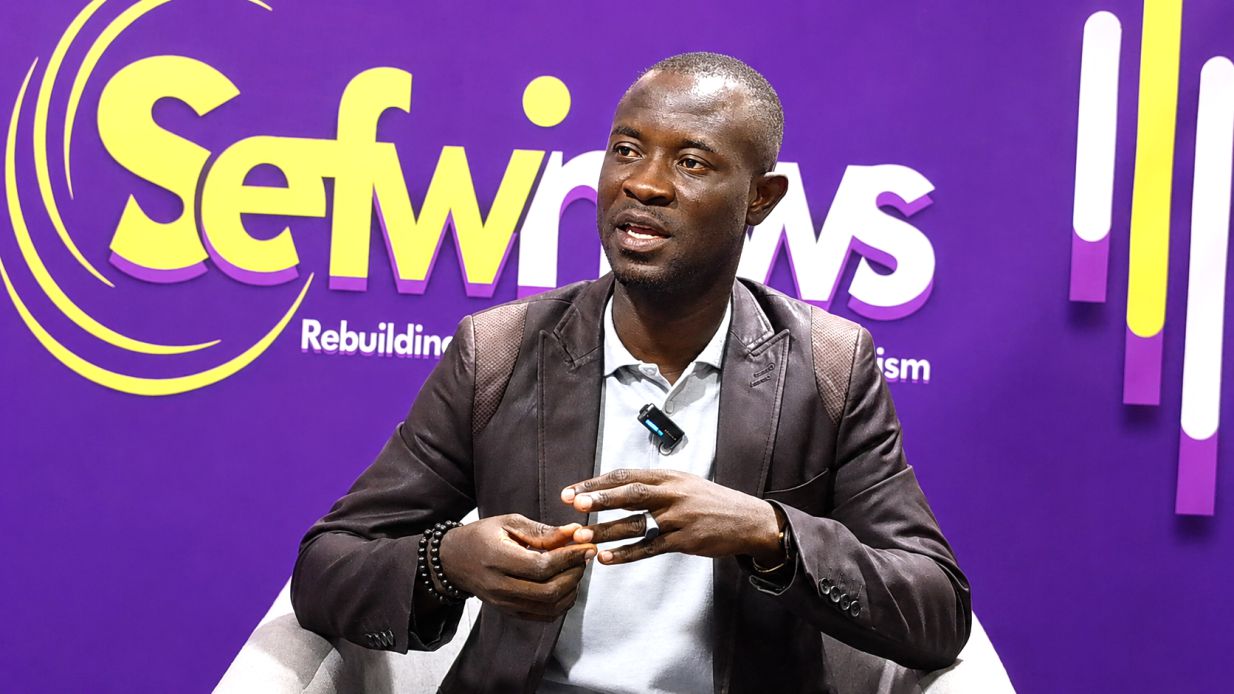
The Deputy Director of the National Disaster Management Organisation (NADMO) in the Western North Region, Marthias Prince Andoh, has attributed the recurring flooding in the Aowin Municipality to the combined effects of illegal mining and poor structural planning, warning that the situation will continue to worsen if urgent interventions are not implemented.
Speaking on ‘The Policy Room’ on Sefwinews, Mr. Andoh said the recent floods that affected several communities in the Aowin Municipality were not solely caused by heavy rainfall but were largely the result of human activities that have degraded the environment and obstructed the natural flow of water.
According to him, illegal mining activities have destroyed natural waterways and protective buffer zones, leaving rivers heavily silted and choked with debris.
He explained that this has significantly reduced the capacity of rivers and streams to contain excess rainwater during the rainy season.
He further noted that poor physical planning and unregulated construction have worsened the situation, with buildings and other structures blocking drainage channels.
In some communities, he revealed, sewage systems have even been connected directly into rivers, contributing to environmental pollution and impeding the free flow of water.
Mr. Andoh expressed concern over the failure to regularly dredge major drains despite repeated warnings from disaster management officials.
“We know it is an emergency. It will come one day to bite us, and we must talk about it,” he cautioned.
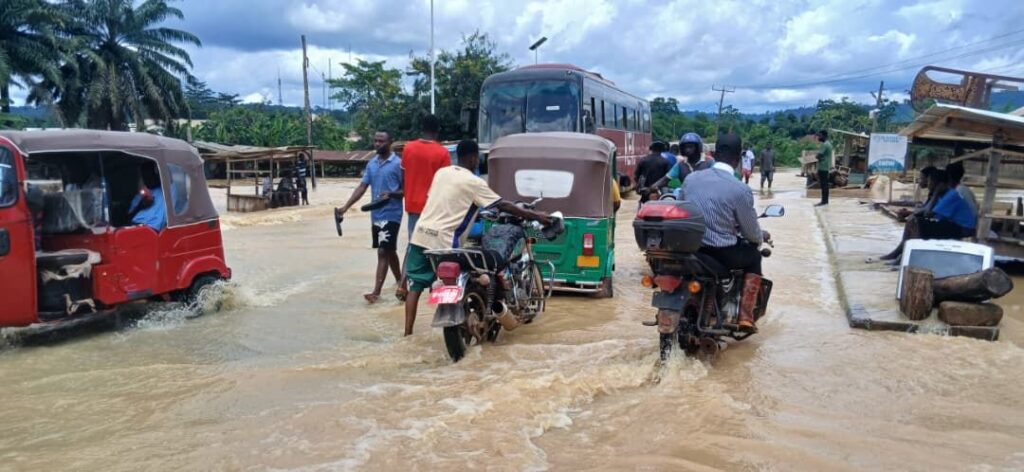
The recent floods brought life in parts of the Aowin Municipality to a standstill. Schools were submerged, forcing students to remain at home for days, while bridges were overtaken by floodwaters, cutting off access to several communities and disrupting economic activities.
Many families whose homes were inundated sought temporary refuge in churches and school buildings as they waited for floodwaters to recede.
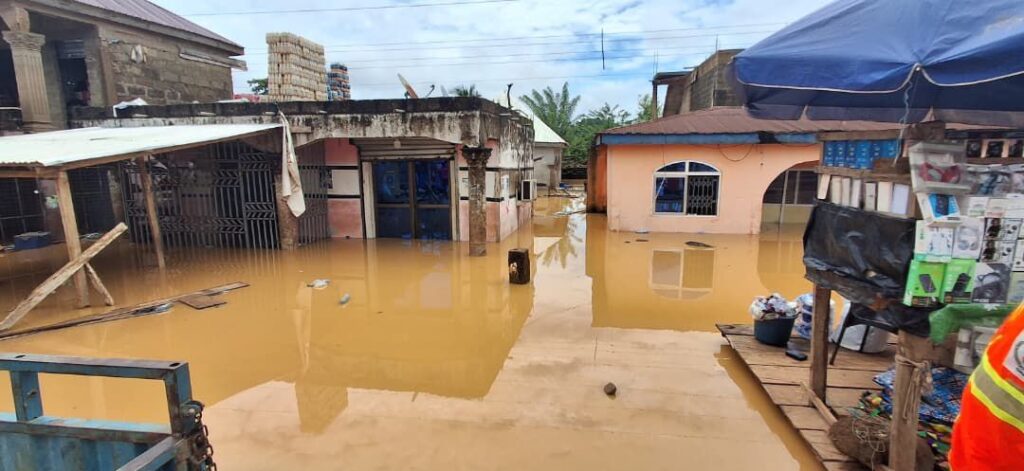
Mr. Andoh observed that although many residents are aware they live in flood-prone areas, they continue to occupy such locations due to various socio-economic challenges.
“Even those who are sleeping in it know very well that since when it floods it will affect them,” he stated.
He stressed that tackling the flood menace requires a coordinated effort involving NADMO, Metropolitan, Municipal and District Assemblies (MMDAs), the Ghana National Fire Service, traditional authorities, environmental agencies, and community leaders.
He called for the strict enforcement of planning regulations, regular dredging of waterways, improved drainage infrastructure, and decisive action against illegal mining to reduce future flood risks.
Mr. Andoh also urged citizens, traditional rulers, religious leaders, civil society organisations, and politicians to speak up against activities that contribute to environmental degradation.
“The earlier you speak about it as citizens, as traditional rulers, as church, as a society, as politicians, the better,” he urged.
He concluded that the recurring floods in Aowin should serve as a wake-up call, emphasizing that while heavy rains may trigger flooding, human activities remain the underlying cause of the devastation.
According to him, unless illegal mining is curbed and proper structural planning is enforced, communities within the municipality will continue to suffer devastating floods, with each occurrence likely to be more destructive than the last.