
Source | Thefourthestategh.com
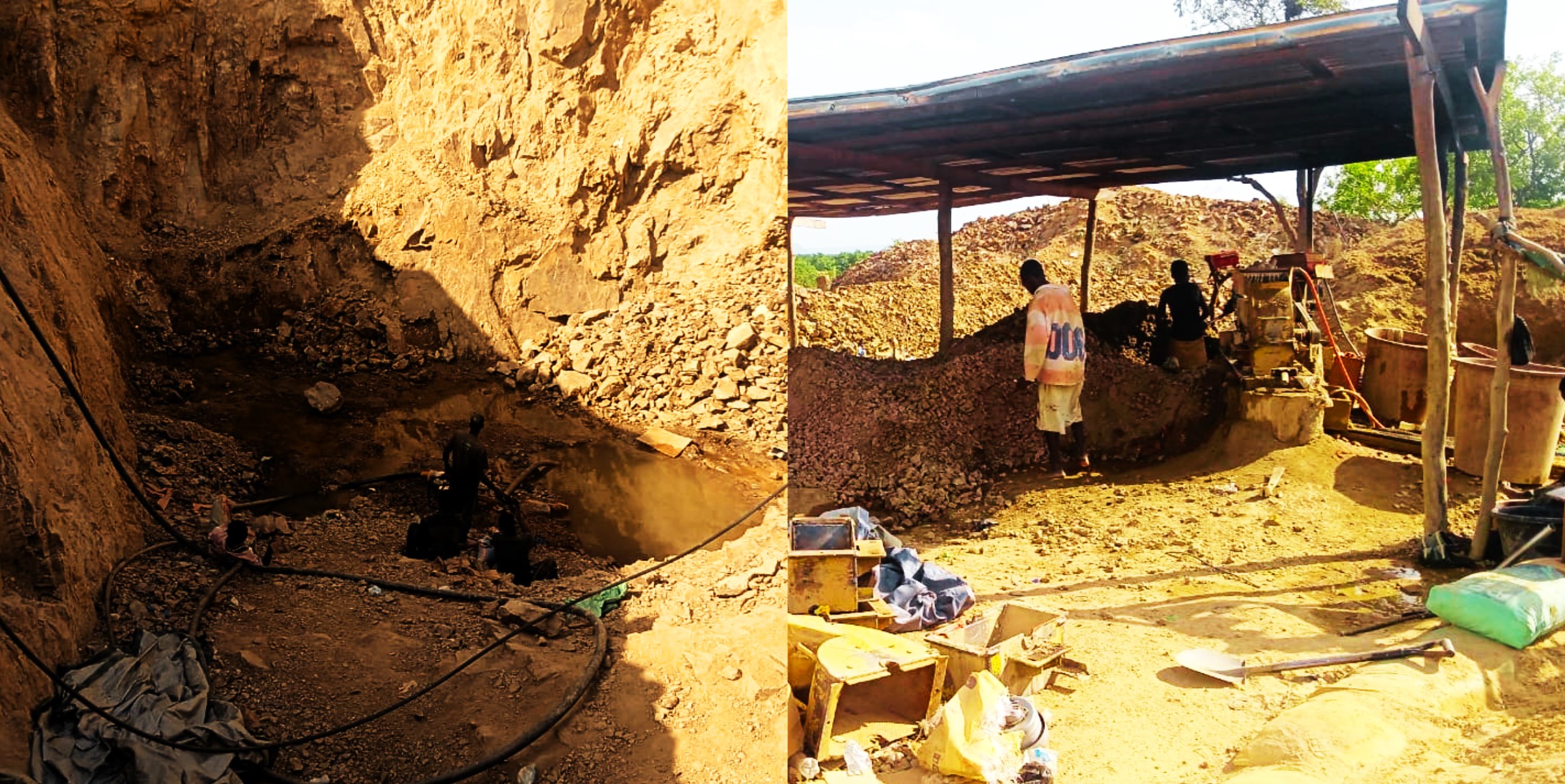
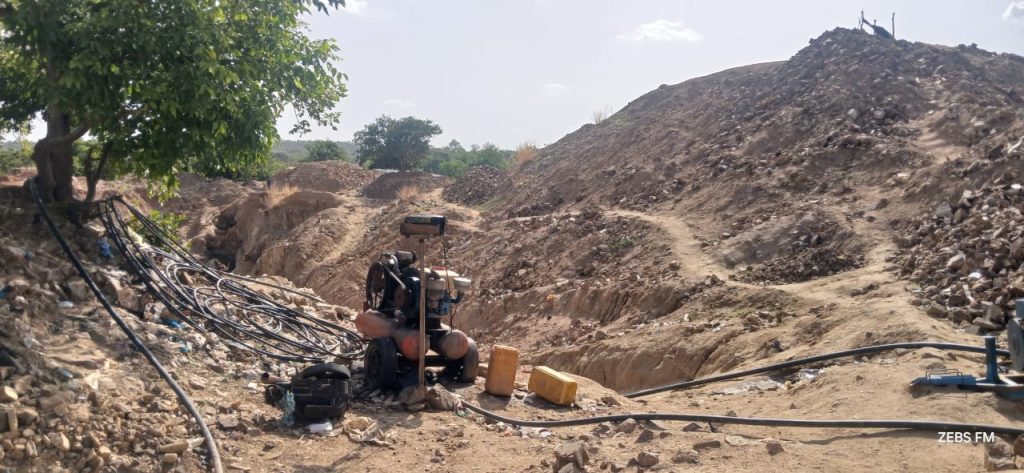
Abu, not his real name, comes home in pain most evenings. His body has learned the language of illegal mining: cracked palms, aching shoulders, the exhaustion of a man who has moved gravel and sand all day. He digs. He hauls. He connects water hoses to pumping machines that suck the ground dry, then moves on to the next pit.
Abu is 17 years old.
His peers are in their second year of senior high school. Abu left that world behind without regrets. He has a scooter motorbike registered in 2026, his own room stocked with modern electrical appliances, and is building a self-contained apartment on his father’s land. His schoolmates phone home asking for soap money. Abu works in galamsey pits in Zongoyire, a community in the Bawku West District of the Upper East Region.
He does not care about how his actions affect the environment. He earns more than enough to take care of himself. That is all that matters to him.
What no one in Zongoyire was warned about clearly early enough and which might bother Abu a bit is what is happening to the town’s water supply.
A physician assistant serving Zongoyire, Sadic Asuah Asore, says that though he has no laboratory to confirm it, galamsey is driving a lot of the diseases he deals with.
What he sees more of is typhoid.
“Mostly, typhoid is related to poor water and poor sanitation,” Asore says. “As they do their activities at the mining site, if it rains, the water runs into the river. And most of them go to do their farming activities at the riverside and drink from the river.”
He advises patients to stop drinking from the river, knowing this is not enough. He warns that if contamination seeps far enough into the ground, even borehole water that looks clean may not be pure. He has seen birth defects he connects, without laboratory confirmation, to what he knows about heavy metals and foetal development.
In Charikpong, in the Nadowli-Kaleo District of the Upper West Region, residents describe living with that uncertainty. “Sometimes we fetch our water, and it contains particles. It looks white and salty, and we drink like that,” says Felicia Dakurah. “Many times, you drink and feel a stomach upset.”
Francisca Kuunoba, a resident of Charikpong, says testers occasionally visit the borehole, but results never reach the people drinking the water.
“They always come to test it for us, but we don’t usually know the outcome.”
Felicia Nubabaare adds that even newly drilled boreholes have come back salty, with no one explaining whether treatment is needed. The best residents do is boil the water before drinking it.
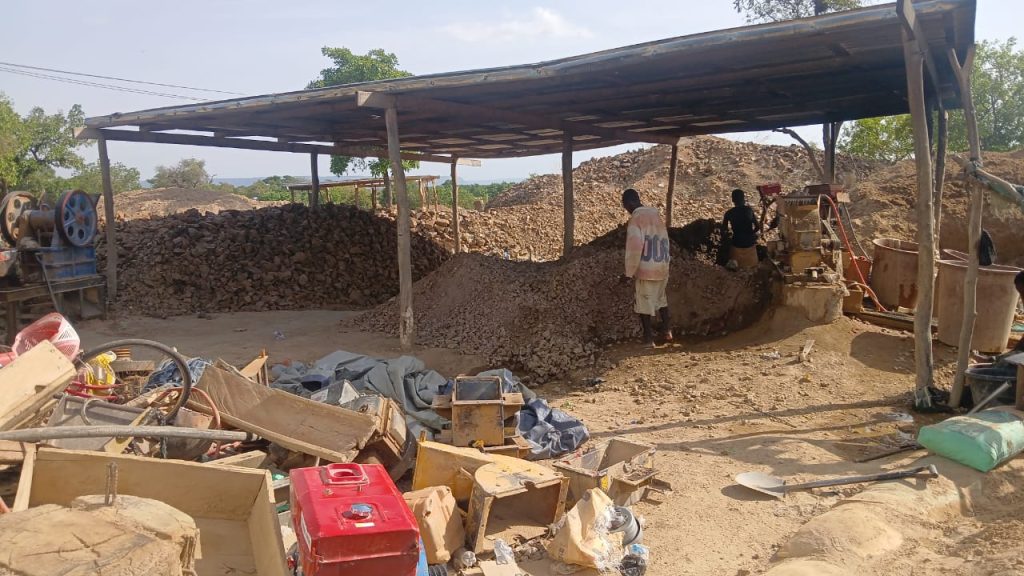
James Anafo has been mining the hills around Zongoyire for more than 25 years. He does not call what he does illegal. To him, it is work – no different from farming. He insists he is careful, with no inspections or studies to tell him what his digging does to the water. His evidence is simple: no one has fallen sick immediately after drinking it.
But Anafo has watched the community change in ways that unsettle him.
“If you get to the site, [children aged eight to ten] are there. All of them have joined the mining,” he says. “If you go to the schools right now, they’re empty.”
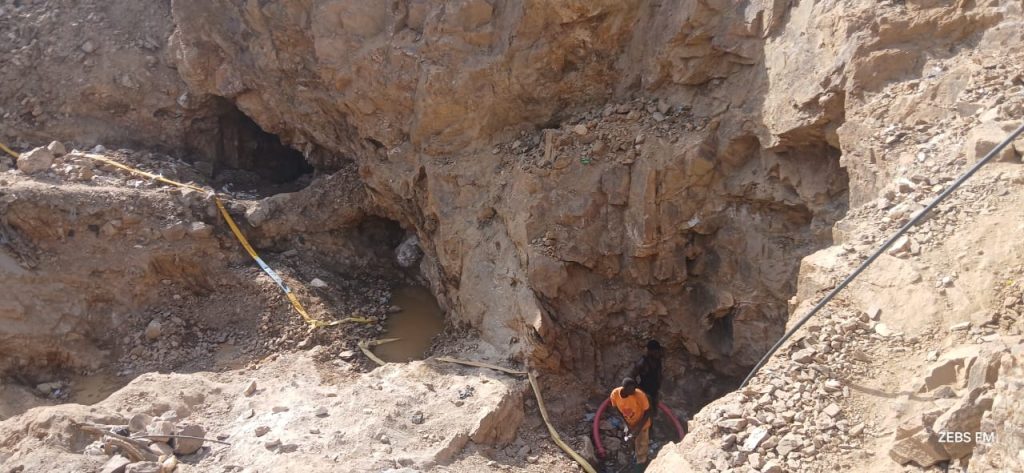
His deeper worry is the newer wave of mining with chemicals he says he himself does not use but has learned about through the small-scale mining association. He knows what cyanide and other chemicals do once released: they sink through the soil into the water table and the streams that feed the boreholes families pump from every day.
“It will go down and mix with the water,” he says, “and then we will pump it back with a borehole to drink.”
The Water Resources Institute found traces of cadmium in the Zongoyire-Yoori water over 260 times above the WHO safe limit and traces of manganese six times above the WHO limit.
In Bulinga-Zongoyire, cadmium exceeded the safe limit by over 450 times.
Cadmium is a toxic heavy metal. It accumulates in the kidneys and liver, where it causes irreversible damage, including making humans prone to cancer. When the findings were described to Anafo, the certainty that had carried him through the conversation gave way.
“Maybe it is true,” he said quietly, “that the water can be giving us problems.”
TAMA Foundation Universal commissioned the CSIR–Water Research Institute in Tamale to conduct an assessment of water quality in northern Ghana. In a 2023 survey of galamsey-affected communities across Upper East, Upper West, North East, and Savannah regions, copper at the Nanguruma washing site hit 16.711 mg/L, more than three times the EPA discharge limit. On the Gbane–Datoko River, cyanide was measured at 1.22 mg/L, nearly 17 times the permitted discharge level.
By 2025, a follow-up study tracing the entire Volta River system, from the White Volta’s entry at Binduri near the Burkina Faso border, through the Black Volta, and on to the coast at Ada in the Greater Accra Region (hundreds of kilometres south), showed the contamination was worsening.
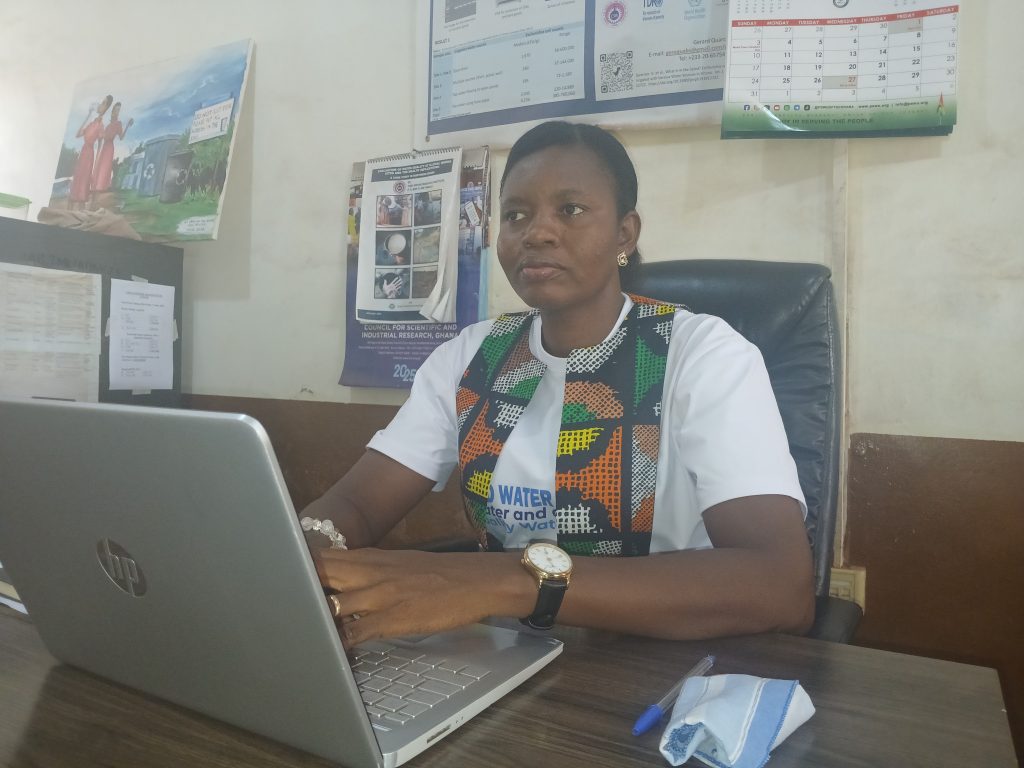
“Once someone takes that water directly with high concentrations of lead, most of the time it doesn’t just happen instantly,” Zita Abuntori, a research scientist at the CSIR–Water Research Institute’s Tamale office who led the assessment. “It will bioaccumulate through drinking directly or through the food chain of a fish.”
Between 2023 and 2025, cyanide levels at Zongoyire-Yoori rose from 0.035 mg/L to 0.1 mg/L. Mercury dropped slightly in some communities, but Abuntori says that decline is not a relief. It may be displacement. Miners across multiple sites told researchers they were now using a second chemical alongside mercury, promising higher gold recovery. Many named it cyanide. Others described its effects: animals that drank contaminated water died almost immediately.
Levels of chromium in a river between Gbane and Datoko rose from 0.015 mg/L in 2023 to 0.3 mg/L in 2025, as operations expanded.
She says in Datoko-Gbane in the Upper East Region, the river running between the two settlements is contaminated with chromium and cyanide.
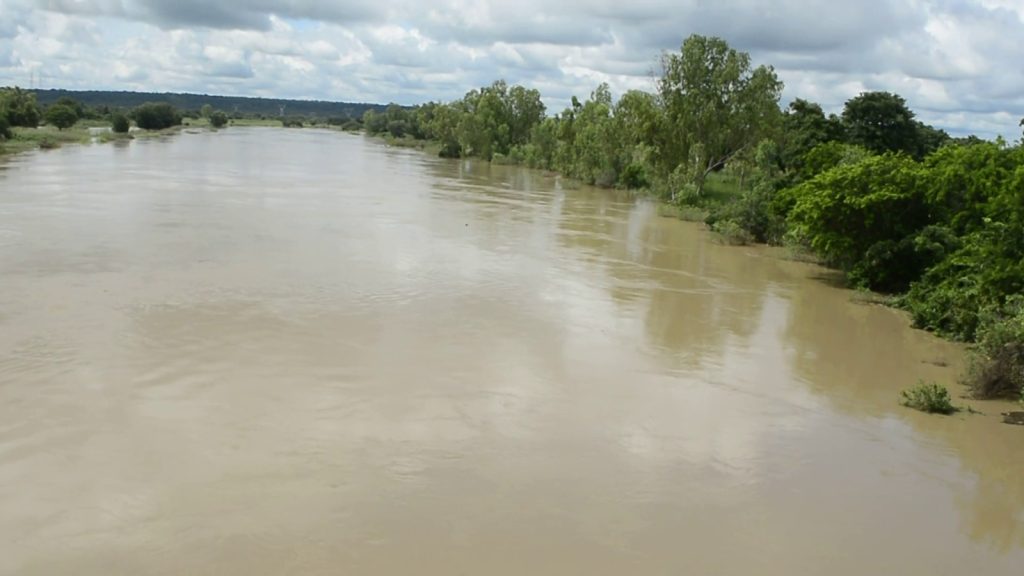
Photo credit: Albert Sore
Near Bamboi in the Savannah Region, miners have set up operations close to the Black Volta. Their illegal mining activities directly pollute the river.
And in Nanguruma in the North East Region, during the rainy season, when runoff from the mining sites drains into the river, it makes it unwholesome for human consumption.
In October 2025, the EPA’s Executive Director, Prof. Nana Ama Browne Klutse, announced that a copper-based nanotechnology, a “nano liquid”, had been laboratory-tested and proven capable of removing heavy metals from contaminated water. By early 2026, a demonstration had been conducted on the Birim River in the Eastern Region, with the technology reported to remove turbidity and heavy metals as water moved through the river.
But the policy think tank IMANI Africa was quick to raise questions. “Until the source of the pollution is neutralised, any chemical miracle will be washed away by the next tide of illegal activity,” IMANI cautioned, warning the programme risked becoming “a drain of resources rather than a solution.” In a brief titled “The Miracle on the Birim: Ecological Restoration or Procurement Pitfall?” IMANI noted that Ghana has more than a dozen major polluted rivers. Scaled across even a portion of that network, the bill could exceed $227 million, it warned. “Is this an investment in ecology,” IMANI asked, “or the birth of a lucrative new industry for ‘restoration contractors’?”
Abuntori’s own recommendations are structural, not technological: mindset education before enforcement, enforcement before remediation, buffer zones protected by law, pits filled, trees replanted; and time. She estimates full reclamation could be achieved in about eight years, assuming everything else goes right.
“We better start it now before it gets late,” she says.
In Zongoyire, the water used by the community does not smell wrong. It has not turned the red-brown turbidity that makes galamsey visible from satellites. The water is still, to the eye and to the taste, the same water people grew up with, the same their grandparents drank.
This is the most dangerous part of what is happening.
The contamination that science has found does not announce itself. Cadmium does not make water taste bitter at 260 times the safe limit. Cyanide at high concentrations works over years and decades toward outcomes that will present as heart disease, kidney failure, cancer, a child born with a deformity, or an old man who is simply older than his body should be.
Abu’s scooter is parked outside. His room is comfortable. The math of his life, right now, adds up.
The question researchers ask is what it will add up to in twenty years, not just for Abu, but for the river his community drinks from, the fish they eat from it, and the children who will inherit whatever is left of both.